What Should You Check Before Buying a Worm Gearbox for Conveyor and Material Handling Equipment?
- By: Expert Team
- October 28, 2026
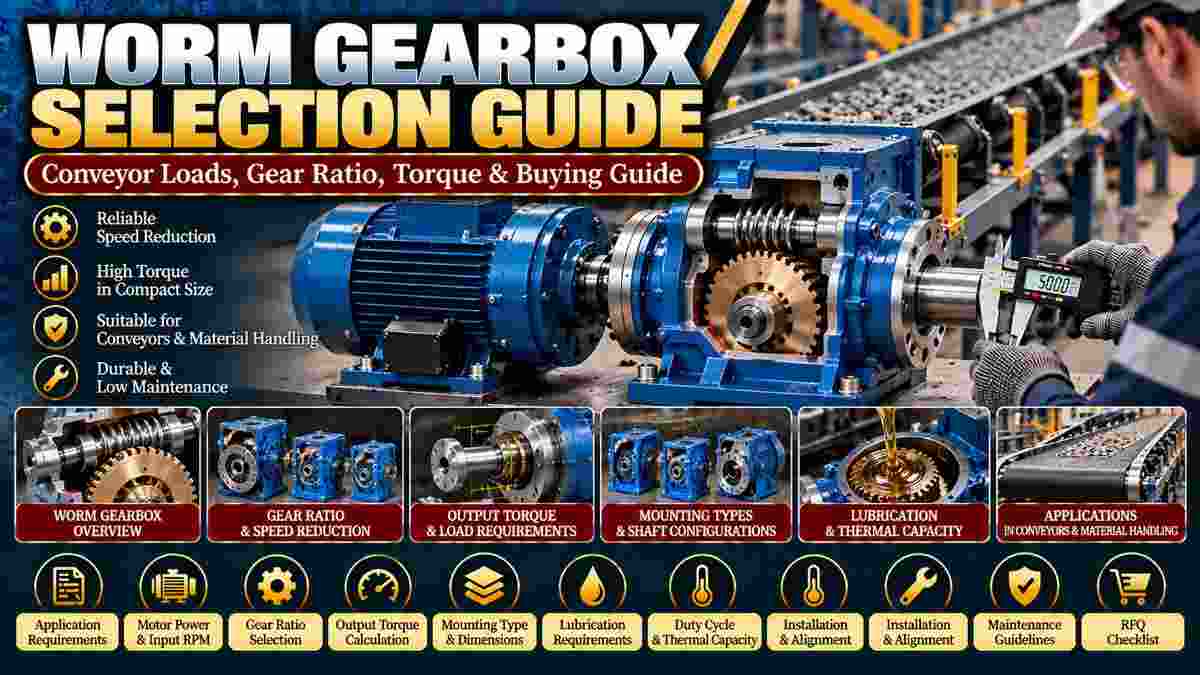
Are you selecting a gearbox for a belt conveyor, packaging line, or industrial material-handling system? An incorrectly sized gearbox can cause overheating, excessive wear, and unexpected downtime.
Worm gearbox selection for conveyors depends on the required gear ratio, output torque, motor power, operating speed, service factor, thermal capacity, mounting position, and lubrication conditions.
JobWurx Industrial Ventures offers industrial gearbox and power transmission solutions for machinery applications.
What Is an Industrial Worm Gearbox?
An industrial worm gearbox is a speed-reduction unit that uses a screw-shaped worm and mating worm wheel to transmit power, usually between perpendicular shafts.
Common applications include:
-
Belt conveyors.
-
Packaging equipment.
-
Material-handling systems.
-
Industrial mixers.
-
Assembly lines.
-
Processing machinery.
Explore Industrial Gearboxes for related products.
How Does a Worm Gearbox Work?
A rotating worm drives a mating worm wheel, reducing output speed while increasing available torque, subject to transmission losses.
Worm gearboxes can provide substantial reduction ratios in compact arrangements.
However, sliding contact between gear teeth generates friction and heat, making lubrication and thermal evaluation essential.
Why Are Worm Gearboxes Used in Conveyor Systems?
Worm gearboxes are considered for conveyor applications requiring speed reduction, compact installation, and a suitable right-angle drive arrangement.
Potential advantages include:
-
Compact construction.
-
High reduction ratios.
-
Convenient shaft arrangements.
-
Controlled output speed.
-
Compatibility with suitable motor drives.
Suitability depends on the conveyor's actual load, operating hours, and thermal requirements.
How Do You Calculate the Required Gear Ratio?
The required reduction ratio is calculated by dividing the gearbox input speed by the desired output speed.
Gear Ratio = Input RPM ÷ Output RPM
For example, a motor operating at 1,500 RPM with a required gearbox output of 50 RPM needs a nominal 30:1 reduction.
Check available standard ratios and any additional belt or chain reductions.
How Do You Calculate Worm Gearbox Output Torque?
Output torque depends on motor power, gearbox output speed, and transmission efficiency.
For a preliminary calculation:
Output Torque (Nm) = 9550 × Output Power (kW) ÷ Output RPM
Output power must account for gearbox efficiency.
Actual conveyor torque requirements should be established from the load, drive arrangement, starting conditions, and applicable engineering calculations.
Why Is Service Factor Important?
Service factor accounts for application demands such as shock loading, operating hours, and frequent starting.
Important factors include:
-
Conveyor loading pattern.
-
Daily operating hours.
-
Starting frequency.
-
Shock loads.
-
Load variations.
-
Reversing operations.
Select the required service factor using the manufacturer's application tables rather than assuming one value fits every conveyor.
How Does Conveyor Load Affect Gearbox Selection?
Conveyor load determines the torque required to move materials under normal and starting conditions.
Consider:
-
Conveyed material weight.
-
Belt or chain resistance.
-
Conveyor inclination.
-
Starting load.
-
Required acceleration.
-
Operating speed.
A heavily loaded conveyor may demand substantially more starting torque than its normal running condition.
Why Is Thermal Capacity Important for Worm Gearboxes?
Thermal capacity determines whether a gearbox can dissipate the heat generated during operation without exceeding its approved temperature limits.
Important considerations include:
-
Input power.
-
Gearbox efficiency.
-
Operating hours.
-
Ambient temperature.
-
Mounting arrangement.
-
Air circulation.
-
Lubrication.
Continuous-duty conveyors require particular attention to thermal ratings.
Which Worm Gearbox Mounting Arrangement Should You Choose?
Mounting configuration should match the conveyor's shaft position, equipment layout, available space, and lubrication requirements.
Common arrangements include:
-
Foot-mounted units.
-
Flange-mounted units.
-
Shaft-mounted configurations.
-
Hollow-output-shaft designs.
-
Solid-output-shaft designs.
Confirm the approved mounting position before ordering.
Why Are Shaft Dimensions and Overhung Loads Important?
Shaft dimensions establish mechanical compatibility, while overhung loads affect gearbox bearings and output-shaft support.
Check:
-
Shaft diameter.
-
Bore dimensions.
-
Keyway.
-
Output orientation.
-
Sprocket or pulley size.
-
Overhung load.
-
Axial load.
External belt and chain drives can introduce significant bearing loads.
How Does Lubrication Affect Worm Gearbox Performance?
Correct lubrication helps control sliding friction, heat generation, and gear wear.
Verify:
-
Approved lubricant.
-
Viscosity.
-
Oil quantity.
-
Operating temperature.
-
Lubrication interval.
-
Mounting-specific fill requirements.
Follow the gearbox manufacturer's instructions and consider lubricant compatibility with bronze worm wheels.
Can Worm Gearboxes Prevent Conveyor Backward Movement?
Some worm gearbox designs resist back-driving under certain conditions, but self-locking must not be assumed.
Back-driving behavior depends on gear geometry, friction, lubrication, vibration, and operating conditions.
Inclined conveyors requiring load holding should use an appropriately designed braking or backstop arrangement.
A worm gearbox is not a substitute for an approved safety brake.
What Causes Worm Gearbox Overheating?
Common causes include overloading, excessive friction, inadequate lubrication, unsuitable duty conditions, and insufficient cooling.
Warning signs include:
-
Excessive housing temperature.
-
Abnormal noise.
-
Oil leakage.
-
Increased vibration.
-
Discolored lubricant.
Investigate operating conditions and mechanical components before replacing the gearbox.
What Should You Check Before Replacing a Worm Gearbox?
A replacement gearbox must match the machine's operating requirements, mounting configuration, and mechanical connections.
Record:
-
Existing gearbox designation.
-
Required gear ratio.
-
Motor power and input RPM.
-
Output torque requirements.
-
Output shaft or bore dimensions.
-
Mounting position.
-
Shaft orientation.
-
Operating duty cycle.
-
Lubrication requirements.
-
Existing technical drawings.
Do not assume units with similar housing dimensions are interchangeable.
What Factors Affect Industrial Worm Gearbox Prices?
Prices depend on gearbox size, torque rating, reduction ratio, materials, mounting configuration, and required customization.
Other factors include lubrication arrangements, inspection requirements, accessories, and quantity.
Compare quotations using the same mechanical and thermal specifications.
What Should You Include in a Worm Gearbox RFQ?
A complete quotation request should specify the conveyor application, mechanical loads, motor details, gearbox dimensions, and operating environment.
Provide:
-
Conveyor type and application.
-
Motor power and input RPM.
-
Required output RPM.
-
Running and starting torque.
-
Operating hours and starts per hour.
-
Service factor requirements.
-
Mounting configuration.
-
Shaft and keyway dimensions.
-
Ambient temperature.
-
Lubrication conditions.
-
Drawings or existing model.
-
Quantity and delivery destination.
These details help suppliers evaluate a suitable gearbox.
Why Should Buyers Consider JobWurx Industrial Ventures?
JobWurx Industrial Ventures offers industrial gearbox and related power transmission products for manufacturing and material-handling applications.
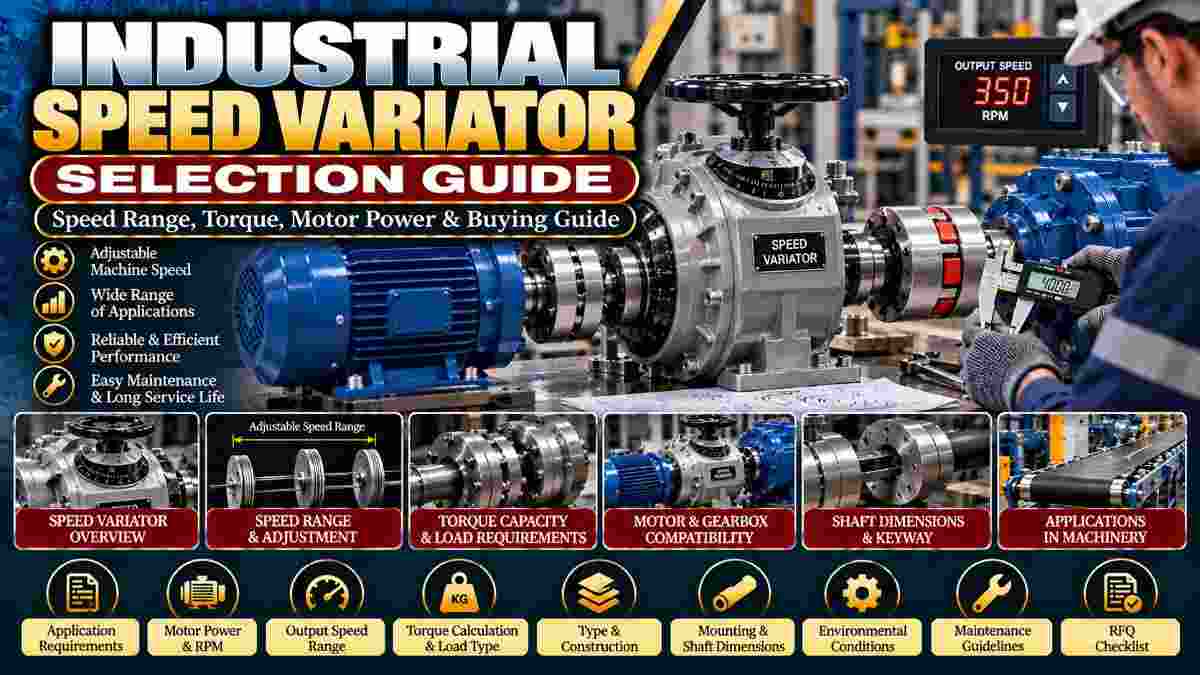
Its gearbox category includes worm gearboxes, helical gearboxes, worm reduction gearboxes, and speed variators.
Explore Industrial Gearbox Solutions for additional information.
Confirm actual product ratings, available models, dimensions, and documentation before purchasing.
What Are the Most Frequently Asked Questions About Worm Gearboxes?
Common questions concern torque, efficiency, service factors, maintenance, and conveyor compatibility.
Are Worm Gearboxes Suitable for Heavy-Duty Conveyors?
They may be suitable when mechanical and thermal ratings meet the application requirements. Other gearbox designs may be preferable for some high-power continuous-duty systems.
Do Worm Gearboxes Require Lubrication?
Yes. Proper lubrication is essential to manage sliding friction and wear.
Can Worm Gearboxes Be Used With Electric Motors?
Yes. Suitable worm gearbox configurations can be connected to compatible electric motor drives.
Are Worm Gearboxes Self-Locking?
Some designs may resist back-driving, but self-locking is not guaranteed and must not replace required safety devices.
Can Worm Gearboxes Be Customized?
Different ratios, output configurations, and mounting arrangements may be available depending on the manufacturer.
How Can You Request a Worm Gearbox From JobWurx?
You can request a quotation by sharing your conveyor application, motor power, gear ratio, output torque, mounting dimensions, duty cycle, and quantity.
For replacement requirements, include the existing gearbox model, nameplate photographs, or approved drawings.
Explore Industrial Gearboxes or contact JobWurx Industrial Ventures to discuss your requirements.
Technical Note: Final gearbox selection should follow manufacturer mechanical and thermal ratings, service-factor requirements, lubrication instructions, and approved machinery safety specifications.