Industrial Roller Chain Installation Tips to Improve Equipment Reliability
- By: Expert Team
- June 29, 2026
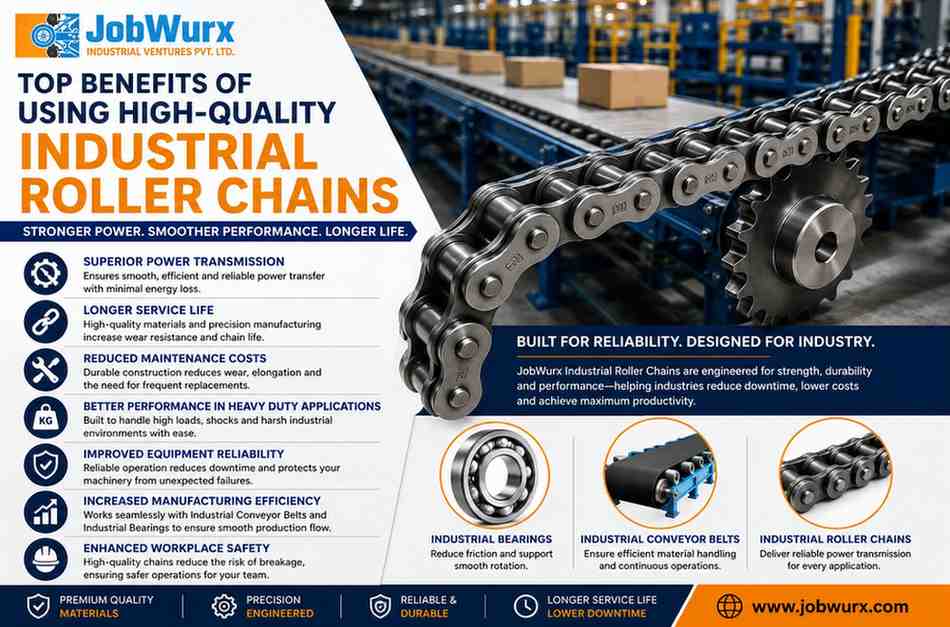
Industrial machinery relies on every component working together with precision, and one of the most critical elements in any power transmission system is the Industrial Roller Chain. A high-quality chain delivers reliable performance, but even the best product can fail prematurely if it is not installed correctly.
Proper installation improves equipment efficiency, reduces maintenance costs, minimizes downtime, and extends the service life of the complete drive system. Whether you're installing a new chain or replacing an existing one, following the correct installation practices helps ensure long-term reliability.
At Jobwurx Industrial Ventures, we manufacture precision-engineered industrial power transmission components designed to perform consistently in demanding industrial environments. This guide explains the essential installation tips every maintenance professional and plant operator should follow.
Why Proper Installation Matters
Many chain failures are not caused by poor product quality but by incorrect installation, improper alignment, or inadequate maintenance. Incorrect installation can lead to:
- Premature chain wear
- Excessive vibration
- Reduced power transmission efficiency
- Higher maintenance costs
- Unexpected equipment downtime
Installing the chain correctly from the beginning protects your investment and keeps production running smoothly.
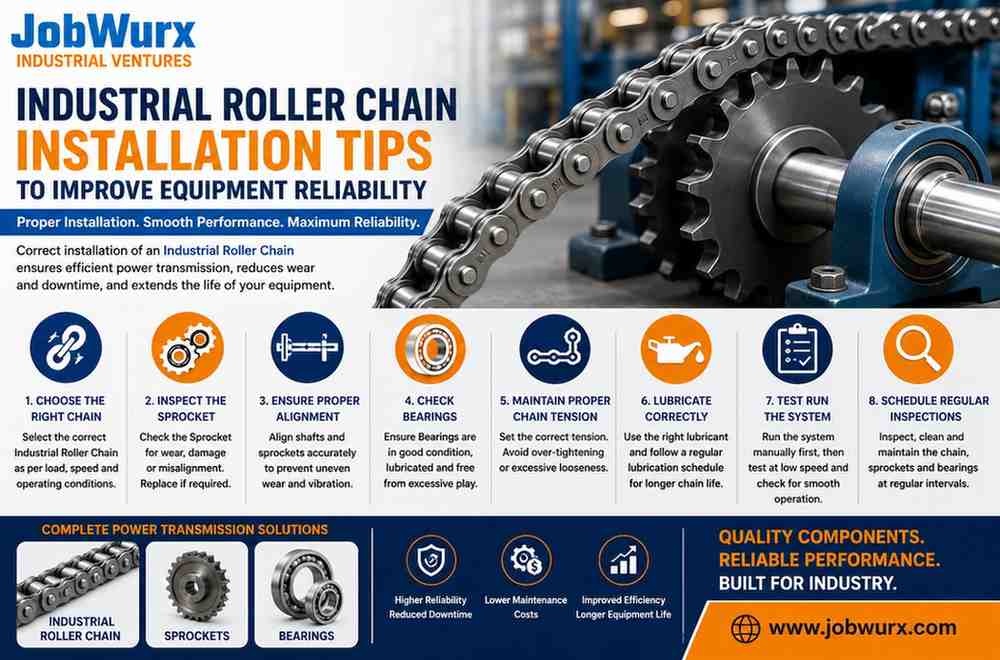
Choose the Correct Industrial Roller Chain
Before installation, verify that the chain specifications match your equipment requirements.
Consider factors such as:
- Chain pitch
- Load capacity
- Operating speed
- Working environment
- Manufacturer specifications
Selecting the right Industrial Roller Chain ensures smooth power transmission and dependable performance under varying operating conditions.
Inspect the Sprocket Before Installation
A chain performs only as well as the Sprocket it runs on. Even a new chain will wear quickly if installed on worn or damaged sprockets.
Before installation, check for:
- Worn or hooked teeth
- Tooth damage
- Misalignment
- Excessive wear
- Proper tooth profile
Replacing worn sprockets along with the chain helps maintain accurate engagement and improves overall drive efficiency.
Ensure Proper Shaft Alignment
Correct shaft alignment is essential for reliable chain operation.
Misaligned shafts can cause:
- Uneven chain wear
- Side loading
- Increased vibration
- Noise during operation
- Reduced equipment life
Use alignment tools to ensure that shafts and sprockets remain perfectly parallel before tightening the system.
Check Bearings Before Installation
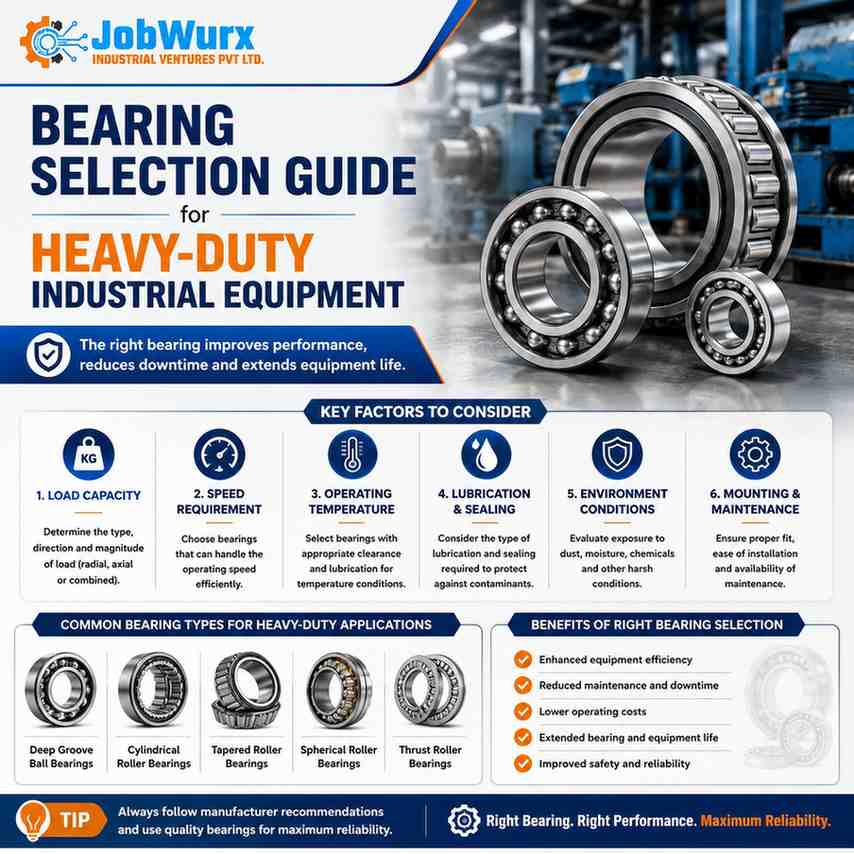
The condition of Bearings directly affects chain performance.
Inspect bearings for:
- Excessive play
- Rough rotation
- Lubrication issues
- Signs of wear
Faulty bearings can cause shaft movement, resulting in improper chain tracking and faster wear. Replacing worn bearings during installation improves overall equipment reliability.
Maintain Proper Chain Tension
One of the most common installation mistakes is incorrect chain tension.
A chain that is too tight increases stress on shafts, bearings, and sprockets, while an overly loose chain may skip teeth, vibrate excessively, or derail during operation.
Follow the equipment manufacturer's recommended tension settings to achieve smooth and efficient performance.
Lubricate Correctly
Lubrication reduces friction between pins, bushings, and rollers.
Proper lubrication helps:
- Reduce wear
- Prevent corrosion
- Minimize heat generation
- Extend chain life
Always use the lubricant recommended for your operating conditions and apply it regularly as part of your maintenance schedule.
Perform a Test Run
After installation:
- Rotate the system manually
- Verify smooth chain movement
- Check sprocket engagement
- Listen for unusual noise
- Inspect chain tracking
Run the equipment at low speed before returning it to full production. Early inspection allows small adjustments before they become major problems.
Schedule Regular Inspections
Installation is only the first step. Regular inspections help identify wear before it causes unexpected failures.
Routine maintenance should include:
- Chain elongation checks
- Lubrication inspection
- Sprocket wear assessment
- Bearing condition monitoring
- Alignment verification
Preventive maintenance significantly improves equipment reliability and reduces unplanned downtime.
Why Choose Jobwurx Industrial Ventures?
Jobwurx Industrial Ventures manufactures high-quality industrial power transmission components designed for long-lasting performance. Our precision-engineered Industrial Roller Chain solutions are built using premium materials, advanced manufacturing techniques, and strict quality control standards.
Along with durable chains, we offer compatible sprockets and other industrial components that work together to deliver reliable power transmission across manufacturing, material handling, packaging, mining, agriculture, and heavy engineering industries.
Conclusion
Correct installation is essential for maximizing the performance and lifespan of an Industrial Roller Chain. By selecting the right chain, inspecting the Sprocket, checking Bearings, maintaining proper alignment, and following recommended lubrication practices, businesses can reduce downtime, improve equipment reliability, and lower maintenance costs.
When quality products are combined with proper installation and preventive maintenance, industrial machinery operates more efficiently and delivers consistent performance. Partnering with Jobwurx Industrial Ventures ensures you receive dependable power transmission solutions engineered to meet the demands of modern industry