How to Choose the Right Industrial Gear for Your Equipment
- By: Expert Team
- June 10, 2026
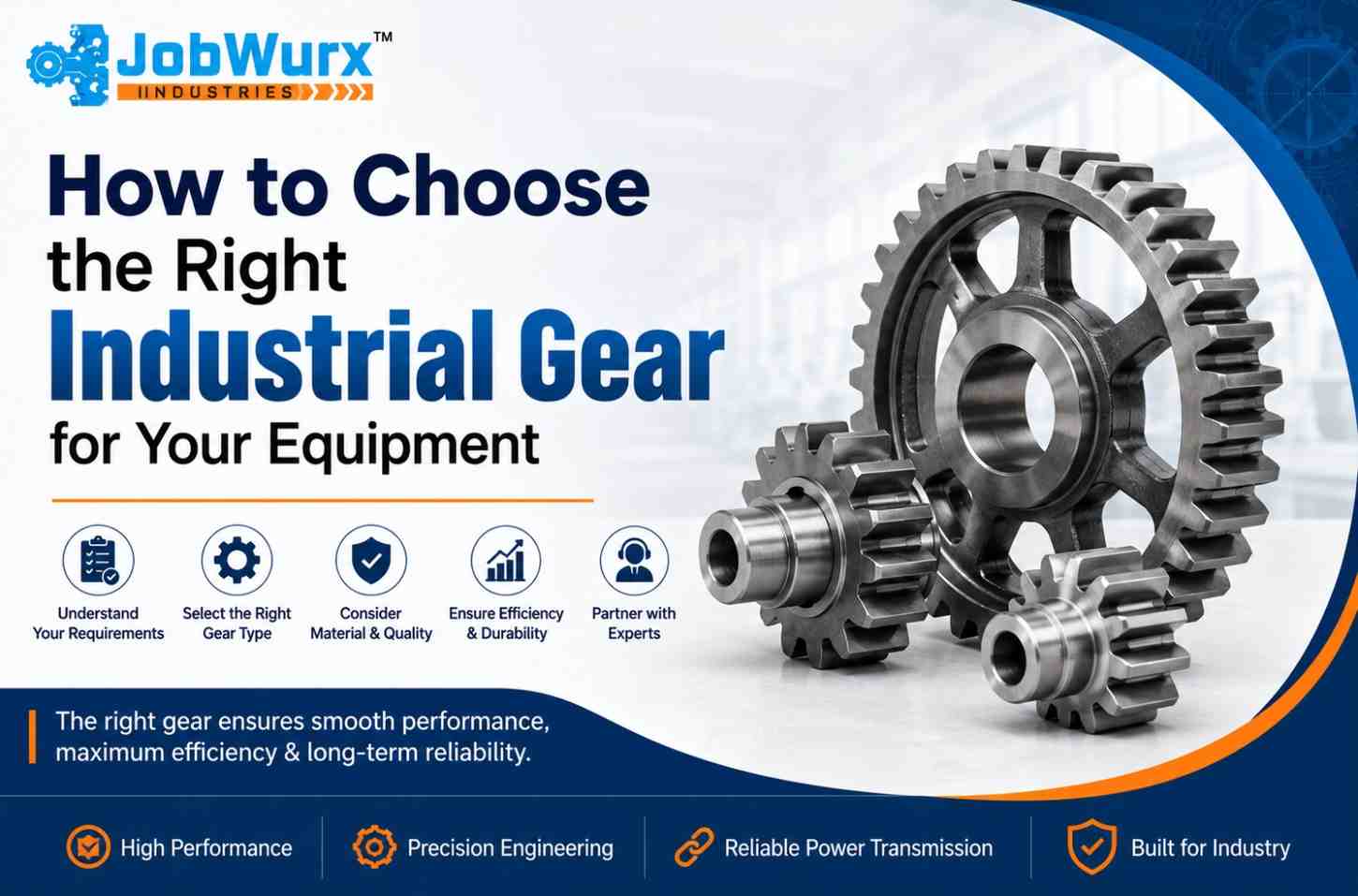
In today's industrial landscape, machinery performance depends heavily on the quality and precision of the components used within power transmission systems. Among these components, Industrial Gears play a critical role in transferring motion, torque, and speed efficiently across various applications. Whether you operate in manufacturing, mining, material handling, cement production, or heavy engineering, selecting the right gear can significantly impact productivity, equipment lifespan, and maintenance costs.
At JobWurx, we understand that choosing the correct gear is not simply about matching dimensions—it requires a careful evaluation of operating conditions, load requirements, and performance expectations.
Why Choosing the Right Industrial Gear Matters
Industrial gears are responsible for transmitting mechanical power between rotating shafts. A poorly selected gear can lead to excessive wear, increased downtime, energy losses, and costly repairs. On the other hand, the right gear ensures:
- Smooth power transmission
- Higher operational efficiency
- Reduced maintenance requirements
- Longer equipment life
- Improved safety and reliability
Making the correct choice from the beginning helps businesses optimize performance while reducing long-term operating expenses.
Understand Your Application Requirements
The first step in selecting the right Industrial Gears is understanding the specific demands of your equipment.
Consider the following factors:
Load Capacity
Determine the amount of torque and load the gear will need to handle. Heavy-duty applications require gears designed for high load-bearing capabilities.
Operating Speed
Different gears perform differently at varying speeds. High-speed applications often require precision-engineered gears to minimize vibration and noise.
Environmental Conditions
Industrial environments may expose gears to dust, moisture, chemicals, or extreme temperatures. Choosing materials and coatings suited to these conditions helps improve durability.
Duty Cycle
Machines operating continuously require gears with higher wear resistance compared to equipment used intermittently.
Evaluate Different Types of Industrial Gears
Understanding gear types is essential when selecting the best solution for your machinery.
Industrial Spur Gears
Industrial Spur Gears are among the most widely used gears in industrial applications. Their straight teeth design allows efficient transmission of power between parallel shafts.
Benefits include:
- High efficiency
- Simple construction
- Easy maintenance
- Cost-effective performance
Industrial Spur Gears are commonly found in conveyors, machine tools, pumps, and packaging equipment.
Pinion Gears
Pinion Gears are smaller gears that mesh with larger gears or racks to transfer motion and torque. They are widely used in gearboxes, lifting equipment, cranes, and industrial automation systems.
Advantages include:
- Precise motion control
- Efficient torque transfer
- Reliable performance in demanding applications
Choosing the correct Pinion Gear size and material is essential for ensuring smooth engagement and minimizing wear.
Consider Material Selection
The material of a gear significantly influences its performance and lifespan.
Common materials include:
Alloy Steel
Offers excellent strength, wear resistance, and durability for heavy-duty applications.
Carbon Steel
Provides a balance between cost and performance for general industrial use.
Stainless Steel
Suitable for corrosive environments such as food processing and chemical industries.
Cast Iron
Often used where vibration damping is important and operating loads are moderate.
The right material should align with your operating environment and performance requirements.
Check Gear Accuracy and Precision
Precision manufacturing directly impacts gear performance. High-quality gears offer:
- Better load distribution
- Reduced vibration
- Lower noise levels
- Improved efficiency
When evaluating suppliers, ensure they maintain strict quality control standards and advanced manufacturing processes.
Assess Maintenance Requirements
Different gear designs require varying levels of maintenance. Consider:
- Lubrication needs
- Ease of inspection
- Replacement availability
- Service life expectancy
Selecting gears that are easy to maintain can reduce downtime and improve operational efficiency.
Partner with an Experienced Manufacturer
One of the most important factors in choosing Industrial Gears is selecting a trusted manufacturing partner. An experienced manufacturer can provide:
- Technical consultation
- Custom gear solutions
- Quality assurance
- Reliable after-sales support
Working with a reputable supplier ensures that your gears are engineered to meet industry standards and application-specific requirements.
Why Businesses Choose JobWurx
At JobWurx, we specialize in manufacturing high-performance Industrial Gears, Pinion Gears, and Industrial Spur Gears designed to meet the demanding needs of modern industries. Our commitment to precision engineering, quality materials, and customer-focused solutions helps businesses achieve reliable and efficient power transmission.
Whether you require standard gear solutions or custom-designed components, our experienced team works closely with clients to deliver products that maximize performance and durability.
Conclusion
Choosing the right Industrial Gear is a crucial decision that directly affects equipment performance, operational efficiency, and maintenance costs. By evaluating factors such as load capacity, operating conditions, gear type, material selection, and manufacturer expertise, businesses can make informed decisions that deliver long-term value.
If you're looking for dependable Industrial Gears, Pinion Gears, or Industrial Spur Gears, JobWurx offers precision-engineered solutions designed to keep your operations running smoothly and efficiently.