How Do You Select an Industrial Speed Variator for Adjustable Machine Speed?
- By: Expert Team
- October 16, 2026
Does your production equipment need adjustable operating speeds without repeatedly replacing pulleys or changing fixed gearbox ratios?
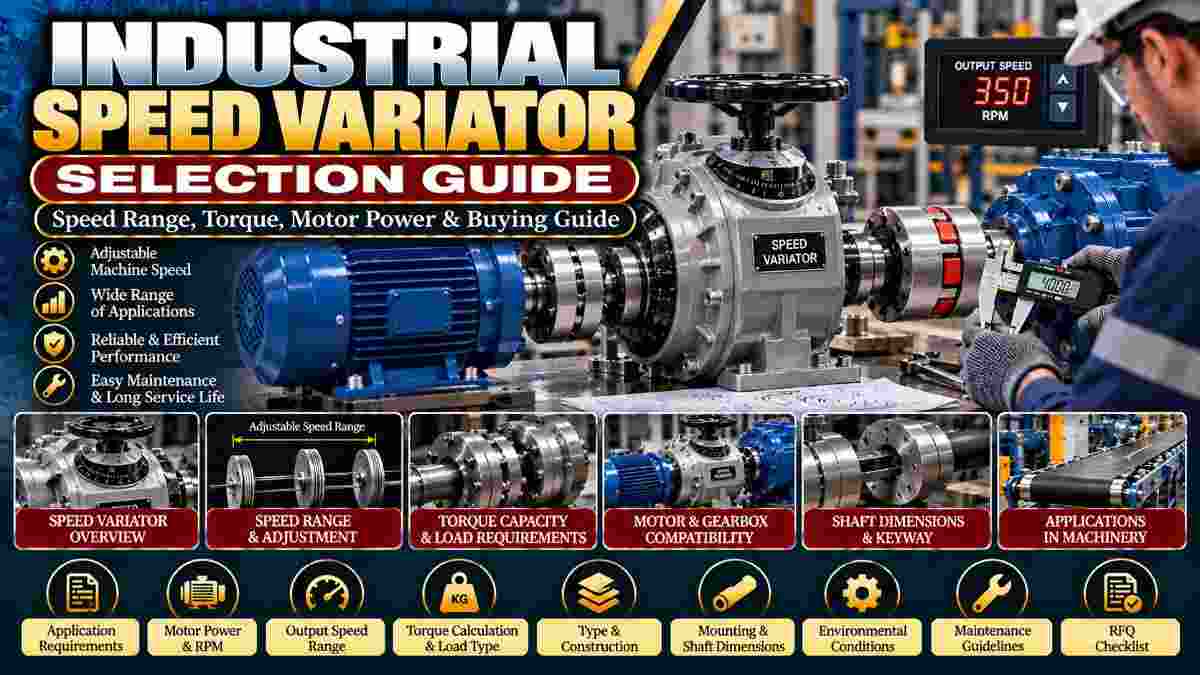
Industrial speed variator selection depends on motor power, input RPM, required output speed range, operating torque, load characteristics, mounting arrangement, and duty cycle.
A suitable speed variator helps operators adjust machine speed to match production requirements.
JobWurx Industrial Ventures offers industrial power transmission components and gearbox solutions for manufacturing applications.
What Is an Industrial Speed Variator?
An industrial speed variator is a mechanical drive device that allows the output speed of connected machinery to be adjusted within a specified operating range.
Mechanical variators are used in applications such as:
-
Conveyor systems.
-
Packaging equipment.
-
Industrial mixers.
-
Processing machinery.
-
Material-handling systems.
-
Manufacturing production lines.
Different designs provide different adjustment ranges, torque characteristics, and mounting options.
Explore Industrial Gearbox Solutions for related drive products.
How Does a Mechanical Speed Variator Work?
A mechanical speed variator changes its transmission ratio through an adjustable mechanical arrangement, allowing output speed to vary while the motor operates.
Depending on its design, it may use friction discs, cones, or other variable-ratio mechanisms.
Many mechanical variators offer manual speed adjustment within their approved range.
The exact operating principle depends on the selected model.
Why Are Speed Variators Used in Industrial Machinery?
Speed variators allow operators to adjust equipment speed according to changing production requirements.
Potential benefits include:
-
Adjustable conveyor movement.
-
Flexible processing speeds.
-
Controlled material handling.
-
Adaptation to different product sizes.
-
Mechanical speed adjustment.
-
Integration with suitable gear reducers.
Actual performance depends on the variator design and application.
What Is the Difference Between a Speed Variator and a Gearbox?
A speed variator provides adjustable output speed, while a conventional fixed-ratio gearbox provides a predetermined speed reduction or increase.
A mechanical variator may be connected to a gearbox when the machine requires both adjustable speed and additional reduction.
The combination must be evaluated for speed, torque, efficiency, and mounting compatibility.
How Do You Select the Correct Speed Adjustment Range?
The selected variator must provide the minimum and maximum output speeds required by the machine under its actual operating load.
Before purchasing, determine:
-
Minimum operating RPM.
-
Maximum operating RPM.
-
Normal production speed.
-
Required adjustment frequency.
-
Load at different speeds.
-
Acceptable speed variation.
Do not assume every speed variator provides the same adjustment range.
Why Is Motor Power Important in Speed Variator Selection?
Motor power helps determine whether the variator can transmit the required mechanical power without exceeding its rated capacity.
Provide:
-
Motor power in kW or HP.
-
Rated motor RPM.
-
Motor type.
-
Required output speed.
-
Operating duty.
-
Starting conditions.
Motor power alone is insufficient because output torque and operating speed must also be evaluated.
How Do You Calculate Output Torque?
Output torque can be estimated from transmitted power and rotational speed, with actual output affected by transmission efficiency.
For metric units:
Torque (Nm) = 9550 × Output Power (kW) ÷ Output Speed (RPM)
This provides a preliminary torque estimate.
Final selection must consider the manufacturer's torque limits throughout the complete operating speed range.
How Does Load Type Affect Speed Variator Selection?
Load type determines the torque and operating conditions that the speed variator must support.
Important factors include:
-
Constant-torque loads.
-
Variable-torque loads.
-
Starting resistance.
-
Shock loading.
-
Rotating inertia.
-
Repeated starting and stopping.
A conveyor carrying heavy materials may have different requirements from a lightly loaded processing machine.
What Is the Difference Between a Mechanical Speed Variator and a VFD?
A mechanical speed variator adjusts speed through a mechanical transmission, while a variable frequency drive (VFD) controls a compatible electric motor by changing its electrical supply frequency and voltage.
Mechanical variators may suit machines requiring straightforward local speed adjustment.
VFDs are often considered where electronic automation, programmable speed control, or motor control integration is required.
Compare both options according to efficiency, load characteristics, environmental conditions, and total operating costs.
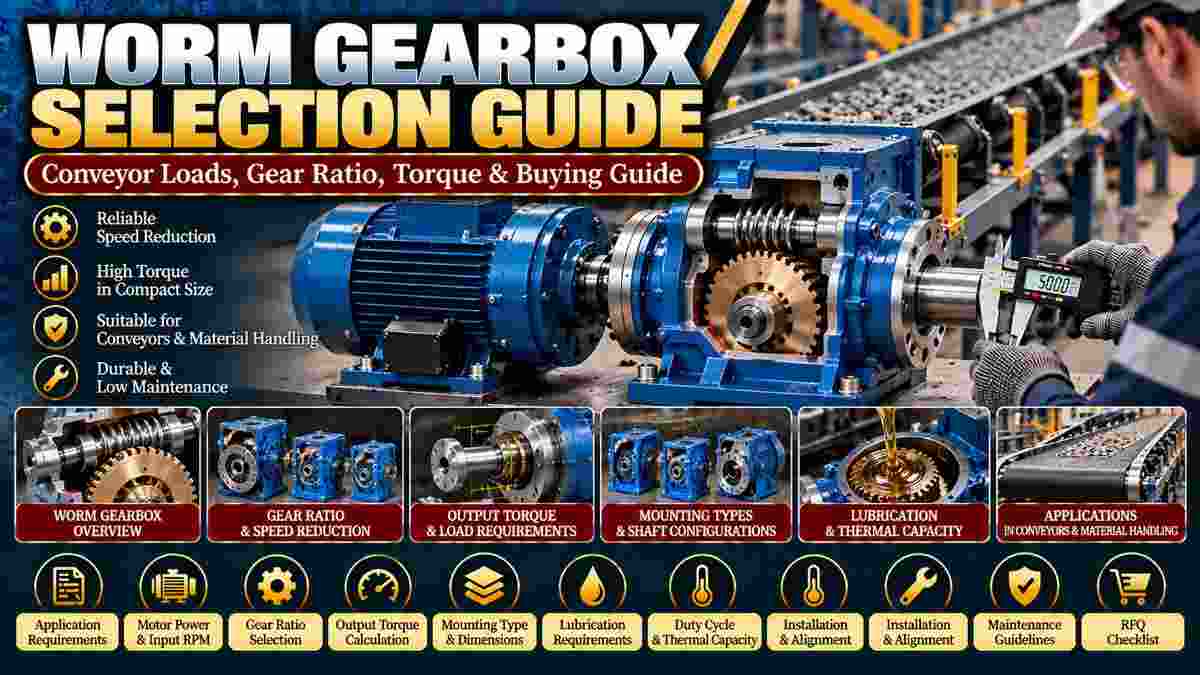
Can a Speed Variator Be Used With a Worm Gearbox?
Yes. Compatible mechanical speed variators can be combined with worm or other gear reducers to achieve a suitable adjustable output speed range.
Before selecting the combination, verify:
-
Variator output speed.
-
Gearbox reduction ratio.
-
Required output torque.
-
Combined efficiency.
-
Shaft compatibility.
-
Mounting arrangement.
The final assembly must meet the equipment manufacturer's specifications.
Why Are Mounting and Shaft Dimensions Important?
Mounting dimensions determine whether the speed variator can be installed correctly within the existing machine arrangement.
Important details include:
-
Input shaft dimensions.
-
Output shaft dimensions.
-
Flange dimensions.
-
Foot mounting arrangement.
-
Keyways.
-
Installation orientation.
-
Available space.
Replacement components should match approved drawings.
What Causes Speed Variator Overheating?
Overheating can result from excessive loading, inadequate lubrication, continuous slipping, improper installation, or unsuitable operating conditions.
Warning signs include:
-
High housing temperature.
-
Unusual vibration.
-
Excessive noise.
-
Reduced performance.
-
Lubricant leakage.
Inspect the complete drive assembly before replacing the variator.
How Should Industrial Speed Variators Be Maintained?
Maintenance should follow the manufacturer's instructions for lubrication, inspection, adjustment, and operating limits.
Recommended checks include:
-
Inspect for oil leakage.
-
Monitor operating temperature.
-
Check mounting fasteners.
-
Examine unusual vibration.
-
Verify output speed.
-
Inspect shaft connections.
-
Follow lubrication intervals.
-
Record recurring problems.
Avoid adjusting a mechanical variator under operating conditions prohibited by its manufacturer.
What Should You Check Before Ordering a Replacement Speed Variator?
Replacement selection requires confirming the original model, speed range, motor specifications, mounting arrangement, and load requirements.
Record:
-
Existing manufacturer and model.
-
Motor power.
-
Input RPM.
-
Minimum and maximum output RPM.
-
Required output torque.
-
Shaft dimensions.
-
Mounting configuration.
-
Operating environment.
Provide a nameplate photograph or technical drawing whenever possible.
What Factors Affect Industrial Speed Variator Prices?
Prices depend on power rating, torque capacity, adjustment range, construction, mounting requirements, and configuration.
Other cost factors include gearbox integration, special materials, inspection requirements, and order quantity.
Compare quotations using identical technical specifications.
What Should You Include in a Speed Variator RFQ?
A complete RFQ should describe the required speed range, motor, load, installation, and operating conditions.
Include:
-
Machine application.
-
Motor power and input RPM.
-
Required minimum output RPM.
-
Required maximum output RPM.
-
Normal and peak output torque.
-
Load characteristics.
-
Operating duty cycle.
-
Starting frequency.
-
Shaft and mounting dimensions.
-
Environmental conditions.
-
Existing model or technical drawing.
-
Quantity and delivery location.
These details help suppliers evaluate a suitable speed variator.
Why Should Buyers Consider JobWurx Industrial Ventures?
JobWurx Industrial Ventures supplies industrial gearbox and power transmission solutions for manufacturing and maintenance applications.
Its gearbox product range includes speed variators alongside worm and helical gearbox categories.
Explore Industrial Gearbox Solutions for relevant product information.
Confirm current models, torque ratings, speed ranges, dimensions, and availability before purchasing.
What Are the Most Frequently Asked Questions About Industrial Speed Variators?
Common questions concern speed adjustment, torque, gearbox compatibility, maintenance, and replacement requirements.
Can Mechanical Speed Variators Adjust Speed Continuously?
Many designs offer continuous adjustment within a specified operating range, subject to manufacturer instructions.
Do Speed Variators Increase Torque?
Output torque depends on the transmission design, speed ratio, efficiency, and rated capacity. Increased torque must not be assumed across the entire speed range.
Can Speed Variators Work With Gearboxes?
Yes, when the variator and gearbox are mechanically compatible and correctly sized.
Are Speed Variators Suitable for Conveyor Systems?
Yes. Suitable models can provide adjustable conveyor speed when load and duty requirements are satisfied.
Can Speed Variators Be Customized?
Different mounting configurations and drive combinations may be available depending on the supplier and model.
How Can You Request an Industrial Speed Variator From JobWurx?
You can request a quotation by sharing your motor power, input speed, required output speed range, torque requirements, mounting details, and quantity.
For replacement applications, include the existing nameplate, drawings, or photographs.
Explore Industrial Gearbox Solutions or contact JobWurx Industrial Ventures to discuss your requirements.
Technical Note: Final selection must follow manufacturer performance curves, allowable torque, operating speed, efficiency, mounting requirements, and applicable machinery safety specifications.