Silence the Noise: Strategies for Reducing Vibration and Noise in Industrial Gears
- By: Expert Team
- February 17, 2026
Walk onto any manufacturing floor, and you expect to hear a certain level of noise. The hum of motors, the clatter of conveyor belts, and the general roar of production are the sounds of business getting done. However, there is a distinct difference between normal operational sounds and the harsh, grinding, or rattling noises that spell trouble.
In the heart of most heavy machinery, you will find industrial gears. These essential components transfer power and keep production lines moving. When they operate smoothly, they are relatively quiet. But when excessive noise and vibration begin to echo through your facility, your machinery is trying to tell you something is wrong.
Ignoring these warning signs leads to catastrophic equipment failure, expensive downtime, and massive repair bills. In this guide, we will explore why gears get noisy, how to diagnose the root problems, and the best ways to restore quiet efficiency to your operations.
Why Do Gears Make Noise in the First Place?
Sound is simply energy traveling through the air. In a mechanical system, excessive noise is the result of wasted energy. Instead of all the motor power going into turning the shaft, some of that power is lost to friction, impacts, and misalignment. This wasted energy transforms into heat, vibration, and ultimately, noise.
To understand how to stop the noise, we first have to look at the physical design of the gears themselves. The type of gear you choose has a massive impact on how loud your machine will be.
Understanding Spur vs. Helical Gear Wear
When engineers design a gearbox, they frequently have to decide between two common types of gears. The differences in their design directly affect their noise levels and how they wear down over time.
Spur Gears
Spur gears have straight teeth that run parallel to the axis of the gear. They are incredibly common because they are easy to manufacture and excellent at transmitting power without creating side-to-side forces. However, there is a major downside. The entire face of a spur gear tooth engages with the opposing tooth all at once. This sudden, full-contact engagement creates a distinct clicking or clashing sound. At high speeds, this continuous clashing turns into a loud whine.
Because the impact is so sudden, spur vs. helical gear wear usually shows up as heavy fatigue at the base of the straight teeth.
Helical Gears
Helical gears are designed to solve the noise problem. Their teeth are cut at an angle. Because of this angled design, the teeth engage gradually. The contact starts at one end of the tooth and smoothly sweeps across the face as the gear rotates. This gradual engagement acts like a shock absorber. It significantly reduces vibration and makes helical gears run much quieter than spur gears. When looking at wear patterns, helical gears tend to distribute the load more evenly, although they do require special bearings to handle the sideways thrust created by the angled teeth.
The Silent Destroyer: What is Gear Pitting?
Sometimes, the noise is not caused by the design of the gear, but by microscopic damage occurring on the surface of the metal. If your gearbox sounds like it is grinding gravel, you might be dealing with a common failure mode known as pitting.
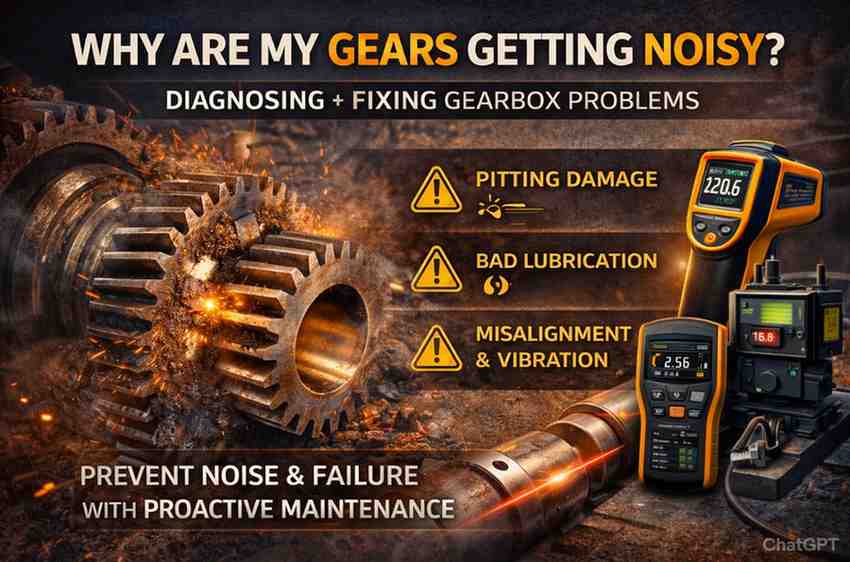
Pitting looks exactly like it sounds. It appears as tiny craters, holes, or "pits" on the smooth surface of the gear teeth. But what are the main causes of gear tooth pitting?
The primary culprit is metal fatigue. As gear teeth press against each other thousands of times per minute, the surface metal undergoes immense stress. Over time, this repetitive stress creates microscopic cracks just below the surface of the metal. Eventually, tiny flakes of metal break away, leaving a pit behind.
Several factors accelerate this destructive process:
- Overloading: Forcing the machine to push heavier loads than it was designed for creates excessive contact stress.
- Contaminated Oil: Dirt or metal shavings in the oil act like sandpaper, weakening the gear surface.
- Misalignment: If the gears do not mesh perfectly, all the pressure is focused on a tiny corner of the tooth instead of spreading out evenly.
Once pitting starts, it is a downward spiral. The rough, pitted surfaces grind against each other, creating more friction, more metal flakes, and significantly more noise.
Decoding the Rattle: The Power of Vibration Analysis
You cannot always stop a machine, open the heavy casing, and inspect the gears with your own eyes. Thankfully, you do not have to guess what is happening inside. You can use technology to listen to the machine. This is where gearbox vibration analysis comes into play.
Think of vibration analysis like an electrocardiogram (EKG) for your machinery. Every turning gear, spinning bearing, and rotating shaft creates a unique vibration signature. When everything is healthy, this signature looks like a smooth, predictable wave.
When a problem starts developing, the vibration pattern changes completely. Maintenance professionals use highly sensitive sensors placed on the outside of the gearbox to measure these tiny vibrations. Software then translates these movements into visual charts.
By analyzing these charts, technicians can pinpoint exact problems without ever opening the machine. They can tell if a gear tooth is cracked, if a bearing is running dry, or if the shafts are out of alignment. Routine gearbox vibration analysis allows you to catch minor issues months before they turn into loud, catastrophic failures.
Why Does Lubrication Matter for Your Gears?
If you want to silence noisy industrial gears, your first line of defense is oil. Lubricant is not just there to make things slippery. It serves as a vital shock absorber, a coolant, and a protective barrier that keeps metal from touching metal.
Following industrial gear lubrication best practices is the easiest and most cost-effective way to extend the life of your equipment.
Here are the golden rules for proper gear lubrication:
- Choose the Right Viscosity: Viscosity is the thickness of the oil. If the oil is too thin, it will squeeze out from between the heavy gear teeth, leading to harsh metal-on-metal contact. If it is too thick, the gears will have to work too hard to push through it, generating excess heat. Always consult the manufacturer's manual for the perfect viscosity grade.
- Keep it Clean: The smallest particle of dust can destroy a gear over time. Store your lubricants in sealed, clean containers. Use high-quality filters on your machinery to trap contaminants before they reach the moving parts.
- Monitor the Temperature: Hot oil degrades quickly. If your gearbox is running too hot, the oil will break down, lose its protective properties, and leave your gears vulnerable.
- Stick to a Schedule: Oil does not last forever. The chemical additives break down over time. Establish a strict schedule for draining old oil, flushing the system, and replacing it with fresh lubricant.
Putting It All Together: Your Maintenance Strategy
Knowing the causes of noise is only half the battle. The real secret to a quiet, efficient factory floor is taking proactive steps to stop problems before they start. Relying on a "fix it when it breaks" mentality is a guaranteed way to lose money.
Instead, you need to implement comprehensive industrial gear maintenance strategies. Use this simple, structured approach to keep your operations running smoothly:
Daily Visual and Auditory Checks
Train your operators to be the first line of defense. Every single day, someone should walk past the machinery to listen for unusual rattling, squealing, or grinding. They should also look for obvious signs of trouble, such as oil puddles under the gearbox or unusual heat radiating from the casing.
Routine Oil Sampling
Do not just wait for the scheduled oil change. Every few months, take a small sample of the gear oil and send it to a laboratory for analysis. The lab can tell you if there are microscopic metal flakes in the oil. This gives you advanced warning of abnormal wear long before you hear any noise.
Precision Alignment
Whenever a motor or gearbox is installed or repaired, do not rely on your eyes to line up the shafts. Use laser alignment tools. Perfectly aligned machinery vibrates less, runs quieter, and lasts significantly longer.
Scheduled Vibration Routes
Invest in handheld vibration sensors. Assign a technician to walk a specific route every month, taking vibration readings on all critical gearboxes. Track these numbers over time to spot upward trends that indicate developing problems.
Conclusion
Noise and vibration are not just annoying byproducts of manufacturing. They are direct indicators of wasted energy, friction, and impending mechanical failure.
By understanding the nature of industrial gears, keeping an eye out for the causes of gear tooth pitting, and utilizing advanced techniques like gearbox vibration analysis, you can take control of your facility's health.
Remember that equipment longevity always comes down to discipline. Adopt strict industrial gear lubrication best practices and enforce rigorous industrial gear maintenance strategies. When you prioritize precision and cleanliness, you will not only silence the disruptive noise on your factory floor, but you will also unlock a new level of profitability and reliability.